Positron Annihilation Lifetime Spectrometer
Positron Annihilation Lifetime Spectrometer
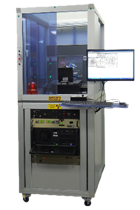
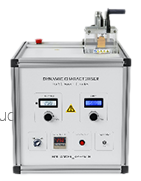
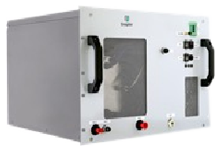
Positron lifetime is used in the testing of semiconductor material defects in the field of materials science. This is a set of positron life test system integrating measuring equipment and power supply.
-
详细介绍
Positron Annihilation Lifetime Spectrometer
Introduction
Positron lifetime spectroscopy is widely applied in the field of materials science for detecting defects in semiconductor materials. This is an integrated measurement and power supply system designed specifically for positron lifetime testing.
Technical Features
In lifetime testing, a 3 GSPS sampling rate is used to measure the positron lifetime, based on fast pulse signals generated by two BaF₂ scintillators. In Doppler Broadening Spectroscopy (CDB), a two-dimensional histogram is calculated from the pulse height distribution values of two high-purity germanium (HPGe) detectors.
Additionally, the system can operate in AMOC mode to measure both positron lifetime and electron momentum density distribution in relevant materials.
✓ Lifetime Spectrum
✓ Doppler Broadening Spectrum (CDB)
✓ Age–Momentum Correlation (AMOC)
Schematic of the Annihilation Process
 Positron Motion in Material
After high-energy positrons are injected into a solid material, they lose energy by colliding with atoms and ionizing/exciting electrons. Within approximately 10⁻¹³ seconds, they thermalize to energies below 100 eV.
Low-energy positrons continue to lose energy by exciting electron-hole pairs, eventually dropping below 1 eV.
Positrons with energy below 1 eV lose additional energy via phonon scattering.
Eventually, positrons reach thermal equilibrium with the material and maintain this state through the emission and absorption of phonons. The thermalized positron energy is approximately 0.0025 eV.
Lifetime Calculation
The positron source ²²Na emits a 1.27 MeV gamma photon simultaneously with a positron. The time difference between this gamma ray and the 511 keV gamma photon emitted during positron–electron annihilation is used to calculate the lifetime.
Positron Motion in Material
After high-energy positrons are injected into a solid material, they lose energy by colliding with atoms and ionizing/exciting electrons. Within approximately 10⁻¹³ seconds, they thermalize to energies below 100 eV.
Low-energy positrons continue to lose energy by exciting electron-hole pairs, eventually dropping below 1 eV.
Positrons with energy below 1 eV lose additional energy via phonon scattering.
Eventually, positrons reach thermal equilibrium with the material and maintain this state through the emission and absorption of phonons. The thermalized positron energy is approximately 0.0025 eV.
Lifetime Calculation
The positron source ²²Na emits a 1.27 MeV gamma photon simultaneously with a positron. The time difference between this gamma ray and the 511 keV gamma photon emitted during positron–electron annihilation is used to calculate the lifetime.

 CDBS Principle
Doppler Broadening:
If the positron–electron pair is at rest during annihilation, two 511 keV gamma photons are emitted in opposite directions (180° apart). However, if the electron in the material has a certain momentum, the energy of each annihilation photon deviates from 511 keV.
DBS is used to record the energy deviation of each photon from 511 keV.
According to the Doppler broadening principle, the Doppler energy shift of the annihilation photon is related to the longitudinal component Pₗ of the total momentum of the positron–electron pair before annihilation:
CDBS Principle
Doppler Broadening:
If the positron–electron pair is at rest during annihilation, two 511 keV gamma photons are emitted in opposite directions (180° apart). However, if the electron in the material has a certain momentum, the energy of each annihilation photon deviates from 511 keV.
DBS is used to record the energy deviation of each photon from 511 keV.
According to the Doppler broadening principle, the Doppler energy shift of the annihilation photon is related to the longitudinal component Pₗ of the total momentum of the positron–electron pair before annihilation:
 The Doppler energy shift is proportional to the longitudinal momentum of the annihilated electron. By measuring the Doppler-broadened energy spectrum, the electron momentum density distribution can be obtained.
Five Measurement Modes
Lifetime Spectrum Mode
Waveform Mode
Energy Mode
CDB (Coincidence Doppler Broadening Spectrum) Mode
AMOC (Age–Momentum Correlation Spectrum) Mode
Lifetime Spectrum Mode
In Lifetime mode, waveforms from two BaF₂ scintillation detectors are acquired simultaneously. The time difference between the rising edges of the two waveforms is used to generate the positron lifetime spectrum.
The Doppler energy shift is proportional to the longitudinal momentum of the annihilated electron. By measuring the Doppler-broadened energy spectrum, the electron momentum density distribution can be obtained.
Five Measurement Modes
Lifetime Spectrum Mode
Waveform Mode
Energy Mode
CDB (Coincidence Doppler Broadening Spectrum) Mode
AMOC (Age–Momentum Correlation Spectrum) Mode
Lifetime Spectrum Mode
In Lifetime mode, waveforms from two BaF₂ scintillation detectors are acquired simultaneously. The time difference between the rising edges of the two waveforms is used to generate the positron lifetime spectrum.

 Waveform Mode
In Waveform mode, the system collects waveforms from two BaF₂ scintillation detectors.
Waveform Mode
In Waveform mode, the system collects waveforms from two BaF₂ scintillation detectors.

 Energy Mode
In Energy mode, the system measures energy spectra from two HPGe semiconductor detectors.
Energy Mode
In Energy mode, the system measures energy spectra from two HPGe semiconductor detectors.

 CDB Mode (Coincidence Doppler Broadening Spectrum)
In CDB mode, the system counts coincidences from two HPGe detectors. Peak values from each detector are used to calculate the Doppler broadening of positron annihilation coincidence counts.
CDB Mode (Coincidence Doppler Broadening Spectrum)
In CDB mode, the system counts coincidences from two HPGe detectors. Peak values from each detector are used to calculate the Doppler broadening of positron annihilation coincidence counts.

 AMOC Mode (Age–Momentum Correlation Spectrum)
AMOC mode involves coincidence counting among two BaF₂ scintillation detectors and one HPGe detector to obtain the time-resolved distribution of positron momentum.
AMOC Mode (Age–Momentum Correlation Spectrum)
AMOC mode involves coincidence counting among two BaF₂ scintillation detectors and one HPGe detector to obtain the time-resolved distribution of positron momentum.


-
详细参数
-
产品特色
因用于机器人各方面应用且与大多数机器人类型兼容,AutoCal系统可以检测出机器人自身构造和工具中心点(TCP)的 突然改变或偏离,并且该系统无需人为干涉就自动地更正这些误差。
AutoCal系统-Dynalog的先进水平校准技术,Dynalog是机器人单元标定技术的世界领导者。它的主流产品DynaCal 系统,被应用于离线的机器人单元校准,并作为最精确的和技术先进的机器人校准程序为许多机器人制造商和终端使用者所接受。AutoCal 系统将已证实的DynaCal校准技术结合到一个在线的全自动系统中,该系统专为程序控制和复原而设计的,价格低廉。
-
详细介绍
AutoCal系统提供在线的机器人校准方案,旨在快速和自动地保证机械设备的工作性能。因用于机器人各方面应用且与大多数机器人类型兼容,AutoCal系统可以检测出机器人自身构造和工具中心点(TCP)的 突然改变或偏离,并且该系统无需人为干涉就自动地更正这些误差。这意味着不用猜测哪里会出错,不用浪费宝贵时间在机器人程序重复校准上,产品品质无任何损失。
AutoCal系统-Dynalog的先进水平校准技术,Dynalog是机器人单元标定技术的世界领导者。它的主流产品DynaCal 系统,被应用于离线的机器人单元校准,并作为最精确的和技术先进的机器人校准程序为许多机器人制造商和终端使用者所接受。AutoCal 系统将已证实的DynaCal校准技术结合到一个在线的全自动系统中,该系统专为程序控制和复原而设计的,价格低廉。