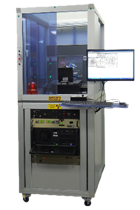
IVM-CM small animal in-situ dynamic analysis imaging system
IVM-CM small animal in-situ dynamic analysis imaging system
In vivo imaging technology mainly uses a set of very sensitive optical detection equipment that can directly monitor cell activities and gene behaviors in living organisms. Through this system, biological processes such as the growth and metastasis of tum
-
详细介绍
Technical Features of IVM-CM:
Two-photon laser wavelength range: 690 nm–1050 nm
Field of View (FOV): 100×100 µm² to 10×10 mm²
Imaging resolution: 100 fps @ 512×512 pixels
Imaging depth: up to 1000 µm
In vivo imaging targets: liver, lymph nodes, spleen, skin, retina, lung, brain, colon, pancreas, small intestine, prostate, kidney, heart, trachea, esophagus, bone marrow, thymus, etc.
 The all-in-one intravital microscopy system from IVIM Technology is equipped with an ultra-fast rotating polygon mirror scanner, enabling ultra-high-speed intravital imaging (up to 100 fps @ 512×512 pixels). It ensures uniform excitation illumination across the entire field of view (FOV), with no fluorescence signal or signal-to-noise ratio (SNR) reduction in the center, and no excessive photobleaching at the edges. The system delivers consistently high SNR throughout the FOV without the need for excessive photon input to improve image quality.
 Application Fields:
Immunology research
Cancer research
Targeted therapy research
Molecular pathology
Application Examples
Application Fields:
Immunology research
Cancer research
Targeted therapy research
Molecular pathology
Application Examples
 Objective
To apply cranial window-based intravital brain imaging technology for brain tumor studies.
Result
Glioma cells were implanted into the brain, and tumor progression was monitored in the same imaging region of the same mouse model for over 15 days. Using IVIM’s intravital microscopy, an increase in the number of glioma cells with rounded morphology was observed as the tumor grew over time.
Objective
To apply cranial window-based intravital brain imaging technology for brain tumor studies.
Result
Glioma cells were implanted into the brain, and tumor progression was monitored in the same imaging region of the same mouse model for over 15 days. Using IVIM’s intravital microscopy, an increase in the number of glioma cells with rounded morphology was observed as the tumor grew over time.
 Objective
To perform longitudinal in vivo monitoring of abdominal organs such as the pancreas, spleen, and kidneys using an abdominal imaging window.
Result
Using MIP-GFP technology, the dynamic behavior of endogenous monocytes and dendritic cells in the spleen was visualized in real time, along with the dynamic changes of pancreatic islet β-cells. The abdominal imaging window enabled long-term monitoring of cellular dynamics and development.
Objective
To perform longitudinal in vivo monitoring of abdominal organs such as the pancreas, spleen, and kidneys using an abdominal imaging window.
Result
Using MIP-GFP technology, the dynamic behavior of endogenous monocytes and dendritic cells in the spleen was visualized in real time, along with the dynamic changes of pancreatic islet β-cells. The abdominal imaging window enabled long-term monitoring of cellular dynamics and development.
 Objective
To monitor and analyze tumor drug efficacy in vivo, including quantitative analysis of angiogenesis, vasodilation, and real-time blood flow changes over time in a single mouse model.
Result
Tumor cells were implanted using IVIM technology, and tumor progression was monitored in real time. Long-term studies of drug delivery and distribution targeting breast cancer were conducted using the system.
Objective
To monitor and analyze tumor drug efficacy in vivo, including quantitative analysis of angiogenesis, vasodilation, and real-time blood flow changes over time in a single mouse model.
Result
Tumor cells were implanted using IVIM technology, and tumor progression was monitored in real time. Long-term studies of drug delivery and distribution targeting breast cancer were conducted using the system.
-
详细参数
-
产品特色
因用于机器人各方面应用且与大多数机器人类型兼容,AutoCal系统可以检测出机器人自身构造和工具中心点(TCP)的 突然改变或偏离,并且该系统无需人为干涉就自动地更正这些误差。
AutoCal系统-Dynalog的先进水平校准技术,Dynalog是机器人单元标定技术的世界领导者。它的主流产品DynaCal 系统,被应用于离线的机器人单元校准,并作为最精确的和技术先进的机器人校准程序为许多机器人制造商和终端使用者所接受。AutoCal 系统将已证实的DynaCal校准技术结合到一个在线的全自动系统中,该系统专为程序控制和复原而设计的,价格低廉。
-
详细介绍
AutoCal系统提供在线的机器人校准方案,旨在快速和自动地保证机械设备的工作性能。因用于机器人各方面应用且与大多数机器人类型兼容,AutoCal系统可以检测出机器人自身构造和工具中心点(TCP)的 突然改变或偏离,并且该系统无需人为干涉就自动地更正这些误差。这意味着不用猜测哪里会出错,不用浪费宝贵时间在机器人程序重复校准上,产品品质无任何损失。
AutoCal系统-Dynalog的先进水平校准技术,Dynalog是机器人单元标定技术的世界领导者。它的主流产品DynaCal 系统,被应用于离线的机器人单元校准,并作为最精确的和技术先进的机器人校准程序为许多机器人制造商和终端使用者所接受。AutoCal 系统将已证实的DynaCal校准技术结合到一个在线的全自动系统中,该系统专为程序控制和复原而设计的,价格低廉。