BRILLOUIN OPTICAL SCANNER SYSTEM BOSS
BRILLOUIN OPTICAL SCANNER SYSTEM BOSS
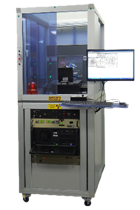
Biomechanical imaging with the Brillouin Optical Scanner System, or BOSS, will address a large range of ophthalmic indications. BOSS is a non-contact, confocal, high-resolution optical scanning platform targeted at identifying the biomechanical properties
-
详细介绍
Brillouin Optical Scanning System — BOSS
Product Overview
Biomechanical imaging using the Brillouin Optical Scanning System (BOSS) addresses a wide range of ophthalmic indications. BOSS is a non-contact, confocal, high-resolution optical scanning platform designed to identify the biomechanical properties of ocular tissues such as the cornea or lens, enabling the generation of spatially resolved profiles of in vivo tissue stiffness.
Working Principle
BOSS analyzes tissue reverberation using light energy to determine its elasticity through the following method:
 Data from the maps can help clinicians identify abnormalities or weaknesses—critical information for surgeons aiming to provide the best possible care for patients.
Brillouin Principle
Brillouin spectroscopy leverages optical principles to detect the speed of sound within living tissues, allowing the determination and visualization of their 3D and real-time viscoelastic properties. “Inelastic scattering” was first detected in 1922 by Isamon Brillouin, but only recently has the BOSS Brillouin scanner made its commercialization technically feasible.
When the low-power, narrowband near-infrared laser from BOSS is focused into the tissue, interactions between light and inherent acoustic waves within the local tissue volume generate Brillouin scattering. A confocal spectrometer then analyzes the Doppler Brillouin frequency shift, which is directly related to the elastic modulus at that point. This enables mapping in all three dimensions and the generation of stiffness maps for the cornea, lens, and other ocular structures.
Product Advantages
The biomechanical imaging of the Brillouin IVF system enables quantitative measurement of the biomechanics (viscosity and elasticity/stiffness) of living tissues and cells without any physical contact. This non-contact, confocal, high-resolution scanning platform identifies biomechanical characteristics of structural differences in tissues, allowing users to construct spatially resolved profiles of in vivo tissue stiffness—significantly improving applications such as embryo and oocyte selection.
Application Areas
In vivo, localized measurement of Young’s modulus; direct measurement of the stress-strain relationship in ocular tissues; impact on the eye’s refractive performance from the cornea to the retina—from the eye’s surface through to the retina-sensory system.
Data from the maps can help clinicians identify abnormalities or weaknesses—critical information for surgeons aiming to provide the best possible care for patients.
Brillouin Principle
Brillouin spectroscopy leverages optical principles to detect the speed of sound within living tissues, allowing the determination and visualization of their 3D and real-time viscoelastic properties. “Inelastic scattering” was first detected in 1922 by Isamon Brillouin, but only recently has the BOSS Brillouin scanner made its commercialization technically feasible.
When the low-power, narrowband near-infrared laser from BOSS is focused into the tissue, interactions between light and inherent acoustic waves within the local tissue volume generate Brillouin scattering. A confocal spectrometer then analyzes the Doppler Brillouin frequency shift, which is directly related to the elastic modulus at that point. This enables mapping in all three dimensions and the generation of stiffness maps for the cornea, lens, and other ocular structures.
Product Advantages
The biomechanical imaging of the Brillouin IVF system enables quantitative measurement of the biomechanics (viscosity and elasticity/stiffness) of living tissues and cells without any physical contact. This non-contact, confocal, high-resolution scanning platform identifies biomechanical characteristics of structural differences in tissues, allowing users to construct spatially resolved profiles of in vivo tissue stiffness—significantly improving applications such as embryo and oocyte selection.
Application Areas
In vivo, localized measurement of Young’s modulus; direct measurement of the stress-strain relationship in ocular tissues; impact on the eye’s refractive performance from the cornea to the retina—from the eye’s surface through to the retina-sensory system.
-
详细参数
-
产品特色
因用于机器人各方面应用且与大多数机器人类型兼容,AutoCal系统可以检测出机器人自身构造和工具中心点(TCP)的 突然改变或偏离,并且该系统无需人为干涉就自动地更正这些误差。
AutoCal系统-Dynalog的先进水平校准技术,Dynalog是机器人单元标定技术的世界领导者。它的主流产品DynaCal 系统,被应用于离线的机器人单元校准,并作为最精确的和技术先进的机器人校准程序为许多机器人制造商和终端使用者所接受。AutoCal 系统将已证实的DynaCal校准技术结合到一个在线的全自动系统中,该系统专为程序控制和复原而设计的,价格低廉。
-
详细介绍
AutoCal系统提供在线的机器人校准方案,旨在快速和自动地保证机械设备的工作性能。因用于机器人各方面应用且与大多数机器人类型兼容,AutoCal系统可以检测出机器人自身构造和工具中心点(TCP)的 突然改变或偏离,并且该系统无需人为干涉就自动地更正这些误差。这意味着不用猜测哪里会出错,不用浪费宝贵时间在机器人程序重复校准上,产品品质无任何损失。
AutoCal系统-Dynalog的先进水平校准技术,Dynalog是机器人单元标定技术的世界领导者。它的主流产品DynaCal 系统,被应用于离线的机器人单元校准,并作为最精确的和技术先进的机器人校准程序为许多机器人制造商和终端使用者所接受。AutoCal 系统将已证实的DynaCal校准技术结合到一个在线的全自动系统中,该系统专为程序控制和复原而设计的,价格低廉。