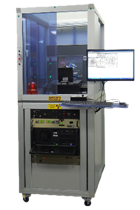
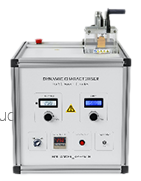
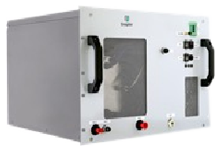
B.sight is a single-microorganism sorter that can be integrated into an anaerobic workstation. This system can separate individual microbial cells onto liquid media or solid agar, bypassing inefficient limited dilution steps. Utilizing unique microscope imaging and single-cell aliquoting technology, it achieves cell separation in a short period of time. It is widely used in microbiological research, strain development, microbiome research, and other fields, supporting the use of 96-well and 384-well plates, enhancing the efficiency of high-throughput experiments. This benchtop system can also be placed in an anaerobic workstation, making it ideal for handling anaerobic bacteria.
 Product Features
1. Dual-mode imaging: Equipped with brightfield vision and fluorescence channels, combined with real-time image analysis technology, it precisely identifies and separates individual cells.
2. Efficient separation technology: Single-cell separation of a 96-well plate can be completed within 3 minutes, and that of a 384-well plate can be completed within 8 minutes, significantly enhancing experimental efficiency.
3. Marker-free gentle separation: Utilizing a marker-free and gentle separation method to avoid damage to cells and ensure high cell viability after separation.
4. Single-cell clone confirmation: Confirm the clonality of the individual prokaryotic cells allocated through nozzle images to ensure that the isolated cells are of a single origin.
5. Compatibility with anaerobic environment: It is suitable for the separation of bacteria and yeast in anaerobic environments, especially for processing anaerobic microbial samples.
6. Automation support: The equipment can be integrated with automated workflows, supports robotic operations, and provides a highly automated experimental environment.
Application field
1. Microbiome research: Isolate and culture bacteria from human, animal, or environmental samples to provide single-cell samples for microbiome analysis.
2. Strain development: Used for isolating individual microorganisms from complex microbial samples, conducting strain screening and cultivation, and supporting strain modification and optimization.
3. Synthetic biology: Accelerate the transformation and cloning workflows in synthetic biology, and promote the development of new pathways and technologies.
4. Brewing and fermentation research: Support the isolation and cultivation of yeast or bacteria, optimize the brewing and fermentation processes, and enhance product quality and production efficiency.