Product Advantages
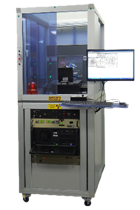
The key advantage of the Machine Vision Automated Embryo Microinjection Platform is its ability to overcome the major limitations of traditional embryo microinjection, including strong dependence on skilled operators, long training requirements, limited throughput, and inconsistent experimental results. By integrating intelligent image recognition and automated robotic control, the platform can perform embryo positioning, injection site identification, and precise injection operations with reduced human intervention. It supports multiple model organisms and enables large-scale genetic engineering and developmental biology studies with improved efficiency, reproducibility, and standardization.
 Main Product Features
Artificial Intelligence-Based Visual Recognition Technology
The platform uses automated imaging and image recognition algorithms to identify embryo locations and analyze target injection areas, improving injection accuracy and experimental reproducibility.
Automated Embryo Microinjection Workflow
The system integrates embryo identification, positioning, injection needle control, and automated injection functions, transforming traditional manual microinjection into a standardized automated process.
High-Throughput Embryo Processing Capability
The platform supports large-scale embryo injection workflows, meeting the requirements of gene editing, transgenic construction, and mutation screening studies.
Support for Multiple Model Organism Embryos
According to publicly available information, the platform supports or has demonstrated applications with the following organisms:
Fruit fly: Used for genetic studies, gene function analysis, and transgenic research.
Drosophila-related species: Used for comparative genetics and evolutionary biology research.
Zebrafish: Used for developmental biology, disease model generation, and gene editing studies.
Medaka fish: Used for fish genetics, developmental research, and functional gene analysis.
Black soldier fly: Used for insect genetics, agricultural biotechnology, and functional gene research.
Aphids: Used for insect biology, plant–insect interaction studies, and pest-related research.
oMosquito embryos: Used for insect genetics and vector biology research (under development).
Expandable to Additional Research Models
The platform utilizes machine learning-based visual recognition technology and can be optimized through algorithm training to adapt to additional animal models and different embryo structures.
Reduced Technical Barrier for Microinjection Experiments
By minimizing dependence on highly skilled manual operators, the platform enables more laboratories to perform standardized and reproducible embryo injection experiments.
Support for Various Genetic Manipulation Applications
The platform can be used for introducing gene editing materials, injecting external genetic materials, transgenic research, and mutation screening applications.
Application Areas
Gene Editing Research
Used to deliver gene editing materials into animal embryos for applications such as gene knockout, gene insertion, and functional gene studies, accelerating the generation of genetically modified models.
Transgenic Animal Model Generation
Used for creating genetically modified animal models to support disease mechanism studies, gene function validation, and fundamental biological research.
Developmental Biology Research
Applied to investigate embryonic development processes, cell differentiation mechanisms, and gene regulation pathways.
Genetics Research and Mutation Screening
By improving embryo injection efficiency, the platform supports large-scale mutant generation and screening for functional genomics studies.
Model Organism Research Platforms
Suitable for universities, research institutes, and animal model facilities seeking automation of embryo manipulation workflows involving organisms such as fruit flies and zebrafish.
Drug Discovery and Disease Model Research
Supports the generation of disease-related animal models for drug target validation and disease mechanism investigation.
Agricultural Biotechnology Research
Applicable to insect model studies, including pest biology research, insect genetic improvement, and functional gene analysis.