-
详细介绍
Product Overview
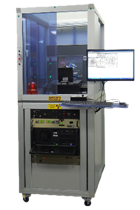
The Operando Electrochemical Scanning Tunneling Microscope (EC-STM) combines scanning tunneling microscopy with electrochemical measurements, enabling real-time atomic- or nanoscale imaging of electrode surfaces under actual electrochemical operating conditions. While the electrode is immersed in an electrolyte and undergoing electrochemical reactions, the system can simultaneously monitor surface morphology and structural changes together with electrochemical signals such as potential and current. This provides direct spatially resolved insight into the dynamic structure and evolution of electrode–electrolyte interfaces, making it a powerful tool for investigating reaction mechanisms, surface reconstruction, active sites, and structural changes in electrocatalysis, energy materials, batteries, corrosion, and surface science.
Product Advantages
Atomic-scale spatial resolution: Provides localized surface structural information that conventional electrochemical techniques cannot resolve, down to individual surface features and atomic-scale structures.
Synchronized microscopy and electrochemistry: Enables electrochemical signals such as current and potential to be correlated directly with microscopic observations for structure–performance analysis.
Strong capability for dynamic studies: Captures processes such as surface reconstruction, deposition, dissolution, and adsorption instead of relying only on before-and-after characterization.
Measurements under liquid conditions: Allows experiments to be performed directly in electrolyte environments, providing conditions closer to practical electrochemical operation.
Localized surface analysis: Makes it possible to distinguish different regions of an electrode surface and investigate local activity and heterogeneity.
Direct structure–activity correlation: Helps connect changes in surface structure with electrochemical performance, providing valuable evidence for reaction-mechanism studies and material optimization.
Main Product Features
Dedicated electrochemical STM cell: Designed for measurements at electrode–electrolyte interfaces under controlled electrochemical conditions.
Integrated STM and electrochemical operation: Combines microscopic imaging with standard electrochemical measurement workflows and modes.
Highly sensitive tunneling-current detection: Obtains surface information by detecting extremely small tunneling currents between the probe and sample.
Coordinated experimental control: Allows STM scanning parameters and electrochemical conditions such as electrode potential to be controlled within the same experimental workflow.
Compatibility with various electrode materials: Suitable for conductive surfaces including metals, single crystals, thin films, and other electrode materials.
Repeated scanning and area tracking: Enables sequential measurements of the same surface region to follow changes during an experiment.
Multi-scale characterization: Combines localized surface information from STM with macroscopic electrochemical responses for a more comprehensive analysis of electrode behavior.

 Application Areas
Electrocatalysis: Investigation of electrode surface evolution and reaction mechanisms in HER, OER, CO₂ reduction, ORR, and other electrochemical reactions.
Fuel Cells & Water Electrolysis: Study of catalyst surface restructuring and degradation under operating conditions.
Batteries & Energy Storage: Characterization of surface reconstruction, deposition, dissolution, and interfacial changes during charge–discharge processes.
Corrosion Science: Investigation of localized surface changes and corrosion mechanisms under electrochemical conditions.
Electrodeposition & Surface Engineering: Study of nucleation, growth, deposition, and surface modification processes at the electrode interface.
Electrode–Electrolyte Interface Research: Investigation of adsorption, desorption, surface restructuring, and other interfacial processes at the microscopic level.
Fundamental Surface Science: Characterization of conductive surfaces such as single crystals, metals, and thin films under different electrochemical conditions.
Application Areas
Electrocatalysis: Investigation of electrode surface evolution and reaction mechanisms in HER, OER, CO₂ reduction, ORR, and other electrochemical reactions.
Fuel Cells & Water Electrolysis: Study of catalyst surface restructuring and degradation under operating conditions.
Batteries & Energy Storage: Characterization of surface reconstruction, deposition, dissolution, and interfacial changes during charge–discharge processes.
Corrosion Science: Investigation of localized surface changes and corrosion mechanisms under electrochemical conditions.
Electrodeposition & Surface Engineering: Study of nucleation, growth, deposition, and surface modification processes at the electrode interface.
Electrode–Electrolyte Interface Research: Investigation of adsorption, desorption, surface restructuring, and other interfacial processes at the microscopic level.
Fundamental Surface Science: Characterization of conductive surfaces such as single crystals, metals, and thin films under different electrochemical conditions.
-
详细参数
Product Specifications
STM Scan Range (X/Y): 3 × 3 μm
STM Scan Range (Z): 0.85 μm
Drift: <5 nm/min (X, Y, Z)
STM Resolution: Atomic resolution on HOPG, <0.24 nm in X/Y
Long-term Stability: >4 hours; typically for large scan areas of 300 × 300 nm
Coarse Travel Range (X/Y): 3 × 3 mm
Electrochemical Cell: Kel-F, customizable according to experimental requirements
Sample Types: Single crystals, metal disks, thin films, and membranes
Reference Electrode: Ag/AgCl, RHE, and metal-wire pseudo-reference electrodes
Counter Electrode: Metal wire, customizable
Electrochemical Techniques: LSV, CV, CA, CP, OCP, and EIS
Electrochemical Voltage Range: ±6 V
Current Range: 10 nA–100 mA, maximum ±200 mA
Electrolyte Flow: Exchangeable PTFE inlet/outlet tubing
Gas Environment: Slight positive-pressure inert atmosphere, supporting N₂ or Ar
Sample Transfer: Optional controlled-atmosphere transfer system
Optical Access: Optical system for monitoring the tip–sample approach
Vibration Isolation: Active vibration isolation
Acoustic Isolation: Acoustic enclosure included
Faraday Cage: Included
SPM Controller: Nanonis Mimea BP5e/BP6e
Tunneling Current Converter: Low-noise, high-stability IV converter
High-Voltage Driver: Dedicated high-voltage driver
-
产品特色
因用于机器人各方面应用且与大多数机器人类型兼容,AutoCal系统可以检测出机器人自身构造和工具中心点(TCP)的 突然改变或偏离,并且该系统无需人为干涉就自动地更正这些误差。
AutoCal系统-Dynalog的先进水平校准技术,Dynalog是机器人单元标定技术的世界领导者。它的主流产品DynaCal 系统,被应用于离线的机器人单元校准,并作为最精确的和技术先进的机器人校准程序为许多机器人制造商和终端使用者所接受。AutoCal 系统将已证实的DynaCal校准技术结合到一个在线的全自动系统中,该系统专为程序控制和复原而设计的,价格低廉。
-
详细介绍
AutoCal系统提供在线的机器人校准方案,旨在快速和自动地保证机械设备的工作性能。因用于机器人各方面应用且与大多数机器人类型兼容,AutoCal系统可以检测出机器人自身构造和工具中心点(TCP)的 突然改变或偏离,并且该系统无需人为干涉就自动地更正这些误差。这意味着不用猜测哪里会出错,不用浪费宝贵时间在机器人程序重复校准上,产品品质无任何损失。
AutoCal系统-Dynalog的先进水平校准技术,Dynalog是机器人单元标定技术的世界领导者。它的主流产品DynaCal 系统,被应用于离线的机器人单元校准,并作为最精确的和技术先进的机器人校准程序为许多机器人制造商和终端使用者所接受。AutoCal 系统将已证实的DynaCal校准技术结合到一个在线的全自动系统中,该系统专为程序控制和复原而设计的,价格低廉。