Fast Scanning Calorimeter
Fast Scanning Calorimeter
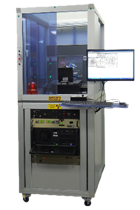
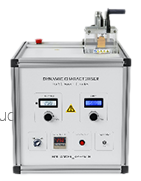
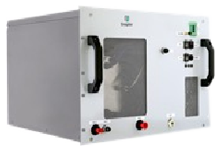
The Fast Scanning Calorimeter (FSC) is a powerful experimental technique that measures heat capacity and enthalpy changes resulting from physical events or chemical reactions of samples at the micro/nano scale during rapid heating or cooling processes. Th
-
详细介绍
Product Overview
The Fast Scanning Calorimeter (FSC) is a powerful experimental technique that measures heat capacity and enthalpy changes resulting from physical events or chemical reactions of samples at the micro/nano scale during rapid heating or cooling processes. Thanks to its wide range of scanning rates, which are several orders of magnitude higher than those of standard calorimeters, the FSC has the capability to suppress reorganization processes, generate and analyze microstructures, and provide a laboratory method to study the impact of various conditions in practice. This includes processing effects and the subsequent amorphization and partial to full crystallization of polymers, metals, and other materials at high cooling rates.
The device features a modular structure and a portable design, with a lightweight construction weighing as little as 1.5 kg, making it ideal for mobile applications and integration across multiple technologies.
Product Advantages
Ultra-fast thermal analysis: Heating and cooling rates can reach up to 10⁷ K/s, enabling the study of transient thermal behavior beyond the capabilities of conventional DSC.
Ultra-small sample analysis: Supports samples from the picogram to microgram range, making it particularly suitable for thin films, fibers, particles, and nanomaterials.
Wide temperature range: Covers approximately 7–1500 K, supporting thermal analysis from cryogenic to high-temperature conditions.
Multimodal integration: Can be synchronized with microscopes, XRD, IR, Raman, PVD chambers, and other external systems for correlated thermal and structural analysis.
Portable modular design: Weighing approximately 1.5 kg, the system can be configured with accessories such as laser heating, ultra-high-vacuum chambers, and liquid-nitrogen cooling adapters.
Main Product Features
Fast scanning: Supports an exceptionally broad scanning-rate range of 0.1–10,000,000 K/s for studying thermal processes across different timescales.
Nanoscale sample compatibility: Supports extremely small samples including particles and thin films, with film thicknesses down to 6 nm.
Open data format: Measurement data are stored in an open format and can be further analyzed using other software.
Traceable data processing: Data-processing algorithms are based on peer-reviewed thermokinetic models, with adjustments documented and reversible.
High-speed synchronization: External equipment synchronization provides timing accuracy up to 1 MHz and supports multimodal integration with optical and diffraction systems.
Wide optical access: Provides 140° top optical access and 50° bottom optical access for integration with external optical systems.
 Application Areas
Polymer Materials: Investigation of rapid crystallization, melting, glass transitions, and the effects of thermal history on material properties.
Metal Materials: Study of melting, crystallization, and phase-transition behavior under rapid heating and cooling conditions.
3D Printing Materials: Real-time investigation of laser-induced heating and cooling of 3D-printing powders.
Nanomaterials: Characterization of thermal properties and stability of thin films, nanoparticles, and other microscale materials.
Pharmaceutical Materials: Investigation of thermal behavior, crystallization kinetics, and the influence of processing conditions on pharmaceutical materials.
Crystallization Kinetics: Study of crystal formation and growth rates under different heating and cooling conditions.
Phase Transitions: Investigation of material-state changes, such as transitions from solid to liquid.
Material Thermal Stability: Analysis of material degradation and decomposition behavior at elevated temperatures.
Application Areas
Polymer Materials: Investigation of rapid crystallization, melting, glass transitions, and the effects of thermal history on material properties.
Metal Materials: Study of melting, crystallization, and phase-transition behavior under rapid heating and cooling conditions.
3D Printing Materials: Real-time investigation of laser-induced heating and cooling of 3D-printing powders.
Nanomaterials: Characterization of thermal properties and stability of thin films, nanoparticles, and other microscale materials.
Pharmaceutical Materials: Investigation of thermal behavior, crystallization kinetics, and the influence of processing conditions on pharmaceutical materials.
Crystallization Kinetics: Study of crystal formation and growth rates under different heating and cooling conditions.
Phase Transitions: Investigation of material-state changes, such as transitions from solid to liquid.
Material Thermal Stability: Analysis of material degradation and decomposition behavior at elevated temperatures.
-
详细参数
Product Specifications
Temperature Range: 7–1500 K
Heating/Cooling Rate: 0.1–10,000,000 K/s
Particle Diameter: Up to 100 μm
Film Thickness: 6 nm–100 μm
Sample Mass: 10 pg–10 μg
Temperature Resolution: 40 mK
Power Sensitivity: 0.12 μW
External Equipment Synchronization: 1 MHz timing accuracy
Optical Access: 140° top / 50° bottom
Instrument Weight: Approximately 1.5 kg
Sensor Dimensions: Customizable from 4 μm to 1 mm.
-
产品特色
因用于机器人各方面应用且与大多数机器人类型兼容,AutoCal系统可以检测出机器人自身构造和工具中心点(TCP)的 突然改变或偏离,并且该系统无需人为干涉就自动地更正这些误差。
AutoCal系统-Dynalog的先进水平校准技术,Dynalog是机器人单元标定技术的世界领导者。它的主流产品DynaCal 系统,被应用于离线的机器人单元校准,并作为最精确的和技术先进的机器人校准程序为许多机器人制造商和终端使用者所接受。AutoCal 系统将已证实的DynaCal校准技术结合到一个在线的全自动系统中,该系统专为程序控制和复原而设计的,价格低廉。
-
详细介绍
AutoCal系统提供在线的机器人校准方案,旨在快速和自动地保证机械设备的工作性能。因用于机器人各方面应用且与大多数机器人类型兼容,AutoCal系统可以检测出机器人自身构造和工具中心点(TCP)的 突然改变或偏离,并且该系统无需人为干涉就自动地更正这些误差。这意味着不用猜测哪里会出错,不用浪费宝贵时间在机器人程序重复校准上,产品品质无任何损失。
AutoCal系统-Dynalog的先进水平校准技术,Dynalog是机器人单元标定技术的世界领导者。它的主流产品DynaCal 系统,被应用于离线的机器人单元校准,并作为最精确的和技术先进的机器人校准程序为许多机器人制造商和终端使用者所接受。AutoCal 系统将已证实的DynaCal校准技术结合到一个在线的全自动系统中,该系统专为程序控制和复原而设计的,价格低廉。