Breeding Screening Seed Screening
Breeding Screening Seed Screening
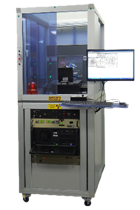
Qualysense is helping seed breeders, food companies and inspection agencies achieve outstanding results in nutrition, health and safety. It combines two sensing technologies-3D machine vision and high-resolution near-infrared spectroscopy.
Each kind of g
-
详细介绍
Introduction
Qualysense is empowering seed breeders, food companies, and inspection agencies to achieve excellence in nutrition, health, and safety. The system integrates two advanced sensing technologies: 3D machine vision and high-resolution near-infrared spectroscopy.
Each grain is transported at high speed to a fixed position under the light source. A color camera captures three-dimensional images of the particles, while a high-resolution near-infrared spectrometer measures the quantity of absorbed light. These dual datasets are processed through sophisticated algorithms that extract geometric parameters and biochemical fingerprints for each grain.
Technical Features
User-friendly operation and maintenance
Consolidates multiple laboratory instruments into a single device
Replaces manual and visual inspections
Facilitates product development and R&D
Processes 20 to 50 grains per second
Technical Principle
By combining dual sensing technologies (3D machine vision and high-resolution near-infrared spectroscopy) with single-kernel analysis, Qsorter achieves exceptional precision and classification capabilities.
 Precise Transport Mechanism
QSorter® Explorer
Precise Transport Mechanism
QSorter® Explorer
 QSorter® Horizon
 QSorter® Explorer: 30 grains/second (laboratory)
 QSorter® Horizon: 3000 grains/second (processing)
 Application Cases
Breeding: The average time to develop a new variety is 8 years, with 80% of seeds being wasted. QSorter helps reduce breeding cycles and waste by:
Early selection of desirable seeds in the breeding process
Impurity removal
Population scale expansion
Reduced greenhouse workload
Minimized wet chemistry requirements
Fraud detection (identifying mixed grain/legume varieties)
Rapid and accurate rice quality analysis:
Chalkiness
Broken kernel size, shape, and volume
Moisture content
Protein content
Immature and damaged grains
6x faster than human inspectors
High precision and consistency in rice grading
Peanut sorting and quality inspection:
Damaged kernel removal
High oleic variety screening from common varieties
Aflatoxin detection
Foreign material removal, including shells (classified separately from damage)
Size and shape measurement for grading and segmentation
20x faster than manual inspection
Unbiased operation, eliminating human error
Process monitoring for gluten-free products:
Oats are naturally gluten-free, but mixed grains appear similar
FDA gluten-free threshold of 20ppm (1/50,000 grain error allowance)
QSorter: 20x faster than human inspectors with >99% accuracy
Application Cases
Breeding: The average time to develop a new variety is 8 years, with 80% of seeds being wasted. QSorter helps reduce breeding cycles and waste by:
Early selection of desirable seeds in the breeding process
Impurity removal
Population scale expansion
Reduced greenhouse workload
Minimized wet chemistry requirements
Fraud detection (identifying mixed grain/legume varieties)
Rapid and accurate rice quality analysis:
Chalkiness
Broken kernel size, shape, and volume
Moisture content
Protein content
Immature and damaged grains
6x faster than human inspectors
High precision and consistency in rice grading
Peanut sorting and quality inspection:
Damaged kernel removal
High oleic variety screening from common varieties
Aflatoxin detection
Foreign material removal, including shells (classified separately from damage)
Size and shape measurement for grading and segmentation
20x faster than manual inspection
Unbiased operation, eliminating human error
Process monitoring for gluten-free products:
Oats are naturally gluten-free, but mixed grains appear similar
FDA gluten-free threshold of 20ppm (1/50,000 grain error allowance)
QSorter: 20x faster than human inspectors with >99% accuracy
 Sound Kernels
 Toxin Risky Kernels
-
详细参数
-
产品特色
因用于机器人各方面应用且与大多数机器人类型兼容,AutoCal系统可以检测出机器人自身构造和工具中心点(TCP)的 突然改变或偏离,并且该系统无需人为干涉就自动地更正这些误差。
AutoCal系统-Dynalog的先进水平校准技术,Dynalog是机器人单元标定技术的世界领导者。它的主流产品DynaCal 系统,被应用于离线的机器人单元校准,并作为最精确的和技术先进的机器人校准程序为许多机器人制造商和终端使用者所接受。AutoCal 系统将已证实的DynaCal校准技术结合到一个在线的全自动系统中,该系统专为程序控制和复原而设计的,价格低廉。
-
详细介绍
AutoCal系统提供在线的机器人校准方案,旨在快速和自动地保证机械设备的工作性能。因用于机器人各方面应用且与大多数机器人类型兼容,AutoCal系统可以检测出机器人自身构造和工具中心点(TCP)的 突然改变或偏离,并且该系统无需人为干涉就自动地更正这些误差。这意味着不用猜测哪里会出错,不用浪费宝贵时间在机器人程序重复校准上,产品品质无任何损失。
AutoCal系统-Dynalog的先进水平校准技术,Dynalog是机器人单元标定技术的世界领导者。它的主流产品DynaCal 系统,被应用于离线的机器人单元校准,并作为最精确的和技术先进的机器人校准程序为许多机器人制造商和终端使用者所接受。AutoCal 系统将已证实的DynaCal校准技术结合到一个在线的全自动系统中,该系统专为程序控制和复原而设计的,价格低廉。